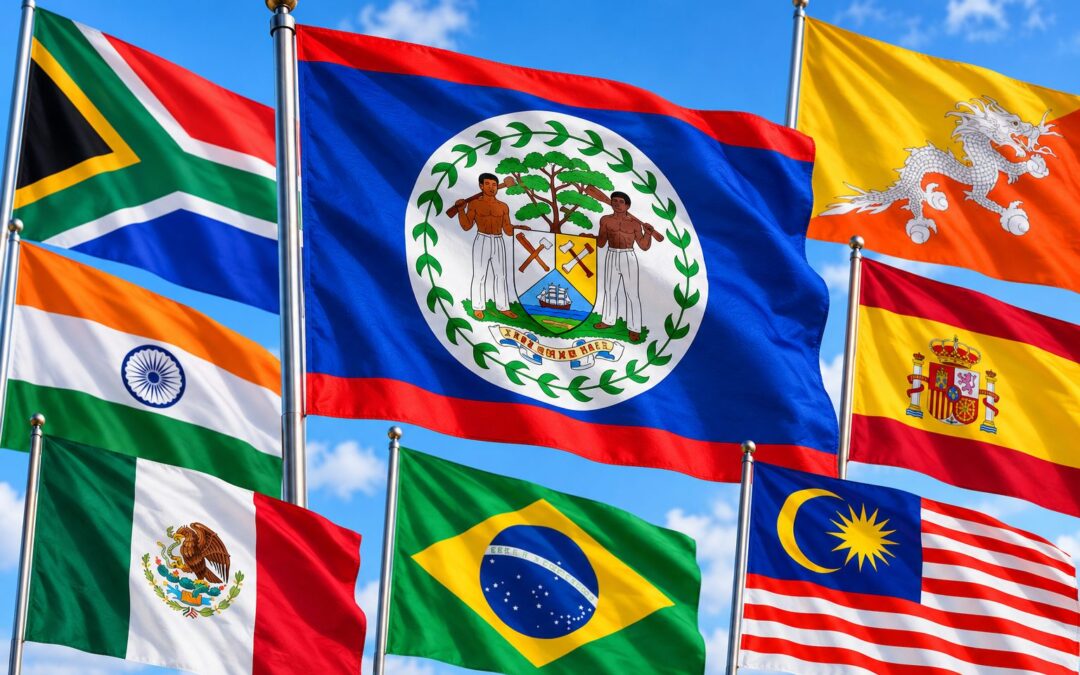
If you have ever wondered which country flag has the most colors, you are not alone because this is one of the most searched flag trivia questions in the world. At first glance, most national flags look simple with just two or three bold colors, so it is surprising to learn that one country packs twelve distinct colors into a single design. In this guide, you will discover the winning country, how experts count those colors, which flags come close, what each shade means, and how to avoid common myths. You will also get practical tips, examples, and answers to frequently asked questions.
We will break down the colorful winner step by step, compare it with other vibrant flags, explain why most nations keep things simple, and show you how to verify color counts yourself. Whether you love geography, design, trivia, or travel, this complete breakdown will give you a clear and confident answer.
Direct Answer To Which Country Flag Has The Most Colors
Belize holds the world record for the most colorful national flag with twelve distinct colors in its current design. No other sovereign national flag officially uses more shades when counted carefully by vexillologists and design standards.
This matters because most flags use only two or three colors for visibility and simplicity. Belize stands out precisely because it breaks that rule with a detailed coat of arms placed on a bold blue field with red stripes.
The high color count comes almost entirely from the central coat of arms, which shows two woodcutters, tools, a mahogany tree, a shield with sailing ships and forestry tools, and a scroll with the national motto. Each skin tone, leaf, uniform, and tool adds another shade.
Some people argue for South Africa, Dominica, or Zimbabwe because those flags look very rainbow-like from a distance. While those designs are indeed vibrant, careful counts place them at six or seven colors, far below Belize.
The takeaway is simple: if someone asks which country flag has the most colors, answer Belize with twelve colors, and you will be correct according to the most widely accepted modern count.
How Many Colors Appear On The Winning Flag
The flag of Belize uses twelve colors when you count the background and every distinct shade inside the coat of arms. Here is how those twelve break down in plain language.
1. Royal Blue Field Background
The main background of the Belize flag is a deep royal blue that covers most of the fabric and immediately catches the eye from a distance. This blue represents the sea, the sky, and the unity of the Belizean people, and it provides a strong contrast that makes the central emblem stand out clearly even when the flag is flying high in bright sunlight.
2. Bright Red Horizontal Stripes
Two narrow red stripes run along the top and bottom edges of the flag, framing the blue field and adding energy and balance to the overall design. These stripes were added when Belize gained independence to honor the two major political parties, and their vivid red tone counts as the second official color in every careful vexillological analysis of this national symbol.
3. Crisp White Scroll And Details
White appears in the motto scroll beneath the shield, in parts of the clothing, and in small highlights that keep the detailed emblem readable. Without white, the many darker shades would blend together, so designers rely on it for separation, text legibility, and a clean outline that helps viewers distinguish faces, letters, and fine lines inside the complex coat of arms.
4. Forest Green Leaves And Tree
Green shows up in the mahogany tree behind the shield and in the wreath of leaves that circles the coat of arms. This green symbolizes the lush forests that shaped Belizean history and the timber trade, and it includes at least one distinct forest shade that is separate from the blue background and the other natural tones used for skin, wood, and tools.
5. Rich Brown Wood And Skin Tones
Brown appears in multiple forms, including mahogany wood, hair, tools, and shaded skin details for the two supporters holding axes and paddles. Experts often count light tan flesh, medium brown hair, and dark mahogany wood as separate shades, which is why the brown family contributes several of the twelve total colors and makes Belize so difficult to reproduce accurately.
6. Yellow Gold Black And Extra Shades
The remaining colors include golden yellow for the shield border and tools, black for outlines and text, light blue for sky details, gray for axe heads and shading, and flesh pink tones for faces and hands. When you add these small but distinct shades together with the major background colors, the total reaches twelve, giving Belize its unmatched rainbow status among world flags.
Closest Contenders For Most Colorful Country Flag
While Belize is the clear winner, several other nations have remarkably colorful flags that often cause confusion. These contenders are worth knowing for trivia and design comparison.
1. South Africa With Six Bold Colors
South Africa is frequently mentioned because its Y-shaped design combines red, white, blue, black, yellow, and green in a striking geometric pattern. Each color represents unity after apartheid, blending elements from past flags into a new symbol of diversity, and its modern look makes it one of the most recognizable multicolor flags even though it has only half as many colors as Belize.
2. Dominica With Rare Purple Parrot
Dominica deserves special attention because it is one of only two national flags in the world to include purple, found in the Sisserou parrot at the center. Along with green, yellow, black, white, and red in its cross and stars, Dominica totals six or more shades, and its use of purple alone makes it a favorite among flag collectors and design enthusiasts worldwide.
3. Zimbabwe With Seven Symbolic Stripes
Zimbabwe features seven horizontal stripes plus a white triangle containing a red star and the famous Zimbabwe Bird. Its colors include green, yellow, red, black, white, and additional brown and yellow tones in the bird carving, bringing its total to seven by many counts. Each stripe honors agriculture, minerals, history, and the struggle for independence.
4. Seychelles With Five Radiating Bands
Seychelles uses five oblique bands of blue, yellow, red, white, and green radiating from the lower corner like sun rays. This dynamic design symbolizes a new nation moving toward the future, with each color representing the sea, sun, people, harmony, and land. It looks incredibly vibrant despite having fewer than half the colors of Belize.
5. Guyana With Five Sharp Symbolic Colors
Guyana is sometimes called the Golden Arrowhead because of its bold red and black triangles edged in white and yellow on a green field. Its five colors stand for forests, rivers, endurance, zeal, and sacrifice, and the sharp geometric shapes make it appear even more colorful than it is. It is a great example of how placement affects perception.
6. Croatia And Other Detailed Emblem Flags
Croatia, Mexico, Spain, and several other nations have detailed coats of arms that add extra shades to simple striped backgrounds. Croatia combines red, white, and blue with additional blue, yellow, black, and light blue inside its checkerboard shield and crowns. While these emblems increase the count to five or six, none approach the twelve-shade complexity of Belize.
Meaning Behind Each Color On The Most Colorful Flag
The colors on the Belize flag are not random decoration. Each shade tells part of the national story, from colonial forestry to independence and unity.
1. Blue For Unity And The Caribbean Sea
The dominant blue honors the Caribbean Sea that borders Belize and the importance of water for trade, fishing, and tourism. It also represents unity among all Belizeans, reminding citizens that despite different cultures and political views, they share one peaceful nation under the same sky and ocean horizon every single day.
2. Red For Strength And Political Balance
Red was added at independence to recognize both major political parties and to symbolize strength, courage, and the blood shed by workers. By placing red at the top and bottom, designers created visual balance while sending a political message that no single group owns the nation and that power must be shared fairly.
3. Green For Forests And Natural Wealth
Green celebrates the mahogany forests that were the backbone of the Belizean economy for centuries and still cover large parts of the country. The mahogany tree, wreath, and leaves remind viewers that nature is both heritage and future, supporting ecotourism, conservation, and sustainable jobs for local communities across the nation today.
4. Brown For Mahogany Workers And Heritage
Brown tones honor the woodcutters, enslaved people, and laborers who cut and shipped mahogany under difficult conditions. The two supporters, tools, and tree trunk shown in brown shades put working people at the center of the national story rather than kings or generals, which is rare and powerful in flag symbolism around the world.
5. White For Peace And Honest Labor
White stands for peace, honesty, and the dignity of work, appearing in the scroll, shirts, and highlights. It softens the darker emblem, keeps the motto readable, and signals that Belize seeks harmony at home and with neighbors. In a flag filled with busy details, white creates breathing room and visual clarity for observers.
6. Gold Yellow And Black For Prosperity And Identity
Gold and yellow suggest sunshine, natural resources, and hope for prosperity, seen in tools, ship details, and shield borders. Black provides outlines, text, and hair definition, ensuring the emblem reproduces clearly at small sizes. Together these accents complete the story of a hardworking maritime nation proud of its diverse Creole, Maya, Mestizo, and Garifuna roots.
Why Most Country Flags Use Few Colors
Most national flags stick to two or three colors for practical and historical reasons. Simplicity makes flags cheaper, more visible, and easier to remember.
- Visibility At Distance: Simple bold colors can be recognized in wind, rain, and battle, while tiny shades disappear.
- Easy Manufacturing: Fewer dyes mean lower cost, faster sewing, and consistent reproduction in villages and factories.
- Strong Symbolism: Two or three colors force clear meaning, like red for courage and white for peace.
- Historical Dyes: Early nations had limited affordable dyes, so red, white, blue, and green dominated.
- Design Rules: Vexillologists recommend keeping flags simple enough for a child to draw from memory.
- Digital Reproduction: Fewer colors display cleanly on screens, uniforms, stamps, and tiny icons.
How To Count Colors On Country Flags Accurately
Counting flag colors sounds easy, but shades, outlines, and emblems create confusion. Follow these steps to get an accurate and fair result.
- Start With Official Specifications: Check the government construction sheet for listed Pantone or thread colors before guessing from photos.
- Separate Field From Emblem: Count background stripes first, then list emblem shades separately to avoid missing small tones.
- Distinguish Shade From Shadow: Decide whether light brown and dark brown are intentional colors or just printing shading.
- Zoom Into High Resolution Images: Use a large vector image to spot tiny colors in faces, leaves, and lettering.
- Ignore Anti-Aliasing Pixels: Do not count blurry edge pixels created by digital compression as real flag colors.
- Compare Multiple Sources: Cross-check three reliable flag databases to see if they agree on Belize having twelve.
- Note Purple And Rare Tones: Pay special attention to rare colors like purple in Dominica that are easy to overlook.
- Record Your Method: Write down whether you counted tints as separate so others can repeat your result fairly.
Common Which Country Flag Has The Most Colors Mistakes To
Many articles give the wrong winner because they miscount shades or confuse vibrant style with true color count. Avoid these common errors.
1. Confusing Bright Design With High Count
People often assume South Africa or Seychelles must win because they look like rainbows from afar. Brightness is about contrast and layout, not total shades. A flag with five bold bands can look more colorful than a detailed flag with ten muted browns, so always count distinct dyes instead of judging vibrancy by first impression alone in photos or videos.
2. Forgetting Small Emblem Shades
Beginners count only the large background stripes and ignore tiny colors inside shields, birds, faces, and trees. In Belize, most of the twelve colors hide inside the coat of arms, not in the blue and red background. If you skip skin tones, leaves, and tools, you will wrongly report only three colors and miss the entire reason Belize holds the record today.
3. Counting Shadows As New Colors
Digital photos create gray edge pixels and fabric shadows that are not official flag colors. Mistaking every gradient for a new dye can inflate counts to twenty or more. Professionals use official vector files and construction sheets rather than wrinkled photographs to decide which browns, blues, and grays are truly intentional in the legal design specification.
4. Mixing Former And Current Flags
Some lists still show old versions of Malawi, Libya, Myanmar, or other redesigned flags. Belize itself changed in 1981 and 2019 with small shade adjustments. Using an outdated image leads to wrong totals and confusing explanations. Always confirm you are looking at the current sovereign national flag adopted by the government, not a colonial badge or civil ensign.
5. Overlooking The Difference Between Dependencies And Countries
Beautiful regional flags like those of some islands or provinces can have many colors, but they are not sovereign country flags. Counting them alongside Belize creates unfair comparisons. For this question, stick to United Nations member states and widely recognized sovereign nations so your answer remains accurate for quizzes, school projects, and search intent.
6. Repeating The South Africa Myth Without Checking
Many blogs copy each other and claim South Africa has the most colors without verifying. South Africa has six excellent symbolic colors, but that is only half of Belize. To avoid spreading misinformation, trace claims back to vexillological sources, count the emblem details yourself, and mention Belize first while presenting South Africa as a strong runner-up instead.
Best Practices For Which Country Flag Has The Most Colors
Whether you are writing, teaching, or designing, these best practices help you explain the topic clearly and accurately.
1. Lead With The Clear Winner First
Start your explanation by naming Belize and its twelve colors before discussing runners-up. Readers searching this question want a fast answer, not a long mystery. Giving the winner upfront builds trust, reduces bounce, and lets you spend the rest of the article adding helpful context, meanings, and comparisons without frustrating curious students and trivia fans.
2. Show Close-Ups Of The Coat Of Arms
Describe or display the central emblem in detail so readers understand where the extra colors come from. Explain the two men, the tree, the shield, the ships, and the scroll in simple words. When people can picture flesh tones, green leaves, and golden tools, the jump from three background colors to twelve total shades suddenly makes perfect sense.
3. Compare With Familiar Flags For Context
Help readers by comparing Belize to flags they already know, such as the United States, France, or Japan. Point out that most familiar flags use two or three colors, so twelve is extraordinary. This contrast makes the record memorable and helps teachers, parents, and quiz coaches explain why Belize is such an outlier in world vexillology today.
4. Explain Counting Methods Transparently
Tell your audience whether you counted light and dark brown as one or two, and whether black and gray are separate. Transparency prevents arguments because different sources sometimes list eleven or thirteen due to shading rules. A short note about your method shows expertise and helps readers trust your twelve-color conclusion over vague competing claims online.
5. Highlight Cultural Meaning Behind Complexity
Do not treat extra colors as mere decoration. Connect each shade to mahogany workers, forests, the sea, and independence. When readers learn that brown honors laborers and blue honors unity, they remember the flag better and respect why Belize chose detail over minimalism despite higher manufacturing cost and design complexity for everyday use.
6. Update Facts When Designs Change Slightly
Governments occasionally adjust shades, proportions, or emblem details without a full redesign. Check official sources yearly if you maintain educational content. A small change in brown or blue specification could shift debates between eleven and twelve, so staying current keeps your article accurate, helpful, and competitive in search results for flag-related queries.
Examples Of Which Country Flag Has The Most Colors
Real examples make abstract counts easier to grasp. These flags show different ways nations add color through bands, symbols, and emblems.
1. Belize As The Twelve Color Champion
Belize is the prime example because its blue field, red stripes, and highly detailed multicolor arms combine everyday symbolism with record-breaking complexity. Teachers use it to show how history, labor, and nature can all appear on one cloth, while designers use it to discuss trade-offs between storytelling and simplicity in national branding and public recognition.
2. South Africa As The Modern Rainbow Symbol
South Africa proves that six well-placed colors can feel just as vibrant as twelve when arranged in bold geometric shapes. Its converging lines symbolize diverse groups moving forward together, making it a favorite example in diversity lessons, sports events, and design classes that value clarity, inclusivity, and instant recognition from a great distance.
3. Dominica As The Purple Pioneer
Dominica is the go-to example for rare color usage because its green parrot contains purple feathers that almost no other flag dares to use. Educators highlight it to explain dye cost, visibility, and uniqueness, while travelers remember it as the lush nature island whose flag literally shows endangered wildlife in the center for conservation awareness.
4. Zimbabwe As The Storytelling Striped Flag
Zimbabwe illustrates how stripes plus a central symbol can carry deep historical meaning. Its seven colors cover Pan-African red, yellow, green, and black plus white peace and the brown-yellow bird. It works well in classroom examples about liberation movements, mineral wealth, agriculture, and how new nations blend old and new symbols after independence.
5. Seychelles As The Dynamic Sunburst Flag
Seychelles offers a clean example of using only five colors for maximum energy through diagonal rays. Designers praise it for motion, optimism, and simplicity, proving you do not need a coat of arms to feel colorful. It is often featured in logo and sports branding discussions as a model of modern flag design done right.
6. United States And Simple Tricolors For Contrast
Contrasting Belize with the United States, France, or Italy helps readers appreciate minimalism. Those flags use just two or three colors yet achieve instant global recognition. This comparison teaches an important lesson that more colors do not always mean better design, and that memorability often comes from bold shapes rather than shade count alone.
Key Which Country Flag Has The Most Colors Factors
Several factors determine whether a flag looks colorful and whether experts count a shade as official. Keep these in mind when comparing designs.
- Emblem Detail: Coats of arms add faces, trees, and tools that multiply shades quickly.
- Official Color Definitions: Government sheets decide if tan and brown count as one or two.
- Rare Hues: Purple, pink, and light blue stand out because almost no flags use them.
- Background Simplicity: Bold fields make small emblem colors appear richer by contrast.
- Reproduction Quality: Fabric, print, and screen versions can shift shades and cause miscounts.
- Historical Changes: Independence updates and shade standardizations alter totals over time.
Frequently Asked Questions
1. Which Country Flag Has The Most Colors In The World
Belize has the most colors with twelve distinct shades on its national flag. The blue field and red stripes provide the base, while the detailed coat of arms adds green, brown, white, yellow, black, gray, and flesh tones that bring the total to twelve.
2. How Many Colors Does The Belize Flag Have Exactly
Most vexillologists count twelve colors on the current Belize flag. Some simplified charts list eleven because they merge two similar browns, but twelve is the widely accepted figure when you include all skin, wood, leaf, metal, and background shades defined in official specifications.
3. Which Country Flag Has The Second Most Colors
Zimbabwe with seven and South Africa and Dominica with six are among the closest contenders. Exact ranking depends on counting method, but none reach Belize. South Africa is often cited as second most vibrant because its six bold colors are more visible than small emblem shades.
4. Which Flags Contain The Rare Color Purple
Dominica and Nicaragua are the only sovereign national flags that include purple. Dominica shows it in the Sisserou parrot, while Nicaragua includes a small rainbow with violet. Purple was historically expensive to produce, which explains why so few nations use it today.
5. Why Does Belize Have So Many Colors On Its Flag
Belize kept its colonial coat of arms to honor mahogany workers and forest heritage. The detailed scene requires many natural shades for people, trees, ships, and tools. Added red stripes at independence increased the count further, preserving history rather than switching to a minimalist design.
6. Do More Colors Make A Flag Better Or Worse
More colors allow richer storytelling but reduce visibility and increase cost. Design experts generally prefer simple flags for memorability, yet Belize shows complexity can work when it reflects strong cultural identity. The best flag balances meaningful symbolism with clear recognition at distance.
Conclusion
Belize clearly wins the title for which country flag has the most colors with twelve distinct shades, thanks to its blue field, red stripes, and richly detailed coat of arms. Runners-up like South Africa, Dominica, Zimbabwe, and Seychelles are vibrant and meaningful, but none match that total.
Remember to count emblem shades carefully, check current official designs, and appreciate both complex and simple flags for what they teach. Whether for trivia, travel, or design inspiration, Belize offers a perfect reminder that every color on a flag carries history, pride, and purpose.