If you are asking what country has a blue and white flag, the short answer is that many countries do, and that is exactly why this question is so popular. The combination of blue and white is one of the most common color schemes in national flags, used by countries in South America, Europe, Central America, and the Middle East. In this guide, you will learn the full list of countries with blue and white flags, what the colors mean, how to tell similar flags apart, and how to avoid common identification mistakes.
Whether you saw a flag during the Olympics, in a classroom quiz, or while traveling, this article will help you identify it with confidence. We will cover famous examples like Argentina, Greece, Finland, and Israel, plus lesser-known ones like Honduras, El Salvador, and Uruguay. You will also get practical tips, meanings, history, and answers to frequently asked questions.
Complete List Of Countries With Blue And White Flags
Several sovereign nations use only blue and white as their main flag colors. While their designs look different up close, they can seem similar from a distance. Here are the most important ones to know.
1. Argentina And Its Sky Blue Stripes
Argentina has one of the most recognizable blue and white flags in the world, featuring three horizontal stripes of light blue, white, and light blue with the Sun of May in the center. The light blue is said to represent the sky and the Rio de la Plata, while white stands for peace and purity. It was first raised in 1812 and remains a powerful national symbol.
2. Greece And Its Cross And Stripes
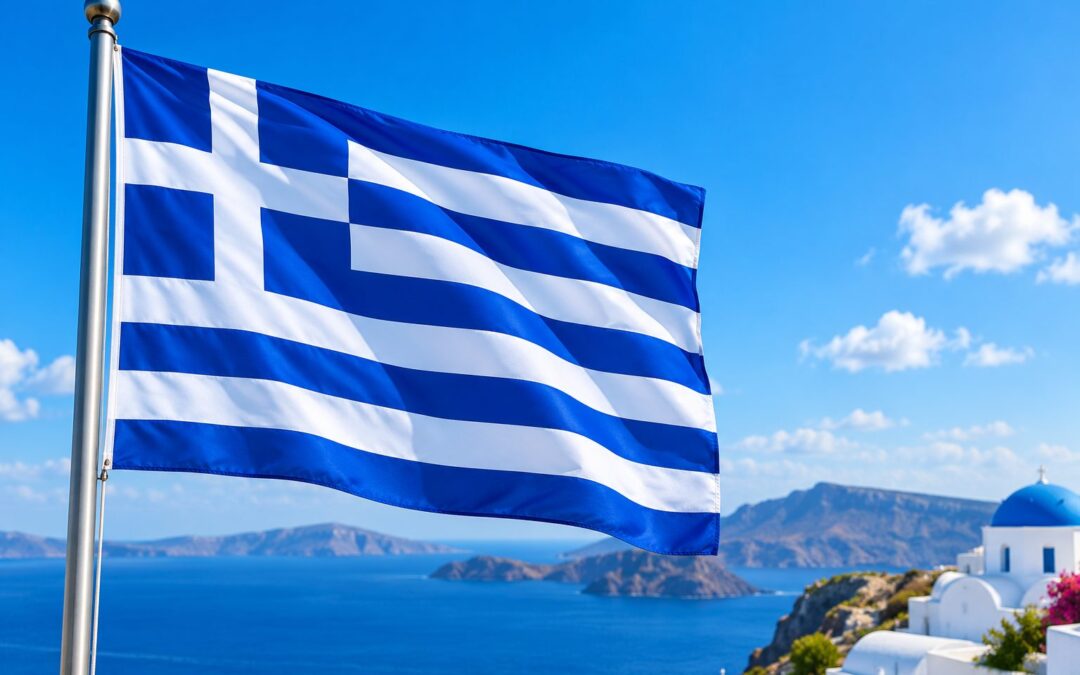
Greece uses a blue and white flag with nine horizontal stripes and a white cross on a blue square in the upper corner. The cross reflects the importance of the Greek Orthodox Church, while the nine stripes are often linked to the nine syllables of the phrase freedom or death. The shades of blue can vary, but the pattern is always distinctive and easy to spot.
3. Finland And Its Nordic Cross
Finland has a simple and elegant blue and white flag with a blue Nordic cross on a white background. The white is often said to represent snow and the bright Finnish winters, while the blue stands for lakes and the sky. Adopted in 1918 after independence, it is a classic example of Scandinavian design and is widely admired for its clarity.
4. Israel And Its Star Of David
Israel has a white flag with two horizontal blue stripes near the top and bottom and a blue Star of David in the center. The design was inspired by the Jewish prayer shawl known as the tallit, which traditionally has blue stripes. White represents peace and new beginnings, while the Star of David is a central symbol of Jewish identity and heritage.
5. Honduras And Its Five Stars
Honduras uses a blue and white flag with three horizontal stripes in blue, white, and blue, with five blue stars arranged in the center. The two outer blue bands represent the Pacific Ocean and the Caribbean Sea, while white stands for peace and prosperity. The five stars symbolize the five nations of the former Federal Republic of Central America.
6. El Salvador And Its National Coat Of Arms
El Salvador has a blue and white flag with three horizontal stripes and the national coat of arms in the center of the white band. Like Honduras, the blue stripes represent the oceans surrounding Central America, while white stands for peace and unity. The coat of arms includes a triangle, volcanoes, a rainbow, and the date of independence, making it unique.
7. Uruguay And Its Sun And Stripes
Uruguay has a blue and white flag with nine alternating white and blue horizontal stripes and a golden Sun of May in the upper corner on a white square. The nine stripes represent the nine original departments of Uruguay, while the sun symbolizes freedom and independence. It shares historical roots with Argentina, which explains the similar sun emblem and color choice.
Meaning Behind Blue And White Flag Colors
The colors blue and white are rarely chosen by accident. Across cultures, they carry consistent meanings related to sky, sea, peace, and freedom. Here is what they usually represent.
1. Blue As A Symbol Of Sky And Freedom
Blue often represents the sky, freedom, vigilance, and national aspiration in flag symbolism around the world. For Argentina and Uruguay, light blue directly evokes a clear sky after colonial rule. For Greece and Finland, darker blue reflects the sea and national endurance. This universal connection to openness makes blue a natural choice for young independent nations.
2. White As A Symbol Of Peace And Unity
White almost always stands for peace, honesty, purity, and unity among citizens in national flag traditions. In Central American flags like Honduras, Nicaragua, and El Salvador, the central white stripe was deliberately placed between blue bands to signal peace between oceans and among people. It creates visual calm and reinforces a message of hope after conflict.
3. Blue For Oceans Lakes And Rivers
Many blue and white flags use blue to honor the water that shapes national life, trade, and identity. Honduras and Nicaragua use blue for the Pacific and Caribbean, Finland uses blue for its thousands of lakes, and Greece uses blue for the Aegean Sea. This geographic meaning helps citizens feel connected to their landscape every time they see the flag.
4. Religious And Cultural Meanings Of Blue
Blue can also carry deep religious and cultural meaning that goes beyond nature and geography in flag design. In Israel, blue comes from the tekhelet dye mentioned in ancient texts and used in prayer shawls. In Greece, blue and white are linked to the Orthodox faith and national revival. These layers give the colors emotional weight that lasts for generations.
5. White For Snow Winter And Clarity
In northern countries, white often celebrates snow, winter light, and moral clarity rather than only peace. Finland is the best example, where white captures snowy landscapes and bright summer nights. The high contrast with blue also ensures excellent visibility in low light, which is both practical and symbolic of honesty and straightforward national character.
6. Combined Message Of Hope And Independence
Together, blue and white often tell a story of a nation that fought for independence and now seeks peace and stability. The pairing feels calm, clean, and optimistic, which is why revolutionary movements in South and Central America adopted it in the nineteenth century. Voters, soldiers, and students can rally around colors that feel both proud and peaceful.
History Of Blue And White National Flags
Most blue and white flags were born during periods of independence, revolution, or nation building in the eighteenth and nineteenth centuries.
South American designs were strongly influenced by the Argentine flag created by Manuel Belgrano in 1812, which later inspired Uruguay and influenced Central American federal flags.
In Europe, the Greek flag evolved during the War of Independence against the Ottoman Empire in the 1820s, while Finland adopted its Nordic cross after gaining independence from Russia in 1917.
Central American blue and white tribands trace back to the Federal Republic of Central America in 1823, which is why Honduras, El Salvador, and Nicaragua still share a similar layout today.
Israel adopted its blue and white design in 1948, drawing on nineteenth century Zionist symbolism, proving that this classic color combination continues to inspire new nations seeking identity and unity.
Famous Blue And White Flag Designs Explained
Looking closely at design details is the fastest way to answer what country has a blue and white flag in any specific photo or video. These breakdowns highlight unique features.
1. Argentina Light Blue Triband With Sun
Argentina uses three equal horizontal bands with the Sun of May showing a human face with straight and wavy rays. The civil flag sometimes appears without the sun, but the official national flag always includes it. The light sky blue shade is distinct from the darker blue used by most other countries, which helps narrow identification quickly.
2. Greece Nine Stripes With Cross Canton
Greece is the only national flag with nine alternating blue and white stripes plus a cross in the canton. Count the stripes if you are unsure, because no Central or South American flag uses this many. The cross design is square and bold, making Greece easy to confirm even on small icons, distant stadiums, or low resolution images.
3. Finland Nordic Cross On White Field
Finland uses an off-center Nordic cross, where the vertical bar is shifted toward the hoist side. This is completely different from horizontal tribands and cannot be confused once you notice the cross shape. Sweden, Norway, and Denmark use similar crosses, but only Finland pairs a dark blue cross with a plain white background.
4. Israel White Field With Blue Stripes And Star
Israel places thin blue stripes near the edges with generous white space and a central Star of David made of two overlapping triangles. The religious symbol is the key identifier, since no other national blue and white flag uses it. The overall look is lighter and more minimal than the solid triband flags of Central America.
5. Honduras Triband With Five-Pointed Stars
Honduras centers five solid blue stars in an X pattern on the middle white stripe. This star cluster is the fastest clue, because El Salvador instead shows a detailed coat of arms and Nicaragua shows a triangle with a rainbow. If you see stars without any emblem, you are almost certainly looking at Honduras.
6. Uruguay Stripes With Golden Sun
Uruguay combines nine thin stripes with a detailed golden sun that includes a face, unlike the simpler stars or crosses of other flags. The gold color is critical, because Argentina uses a similar sun but with only three wide stripes. Counting stripes and checking the canton will prevent mixing up these two neighboring countries.
How To Identify Blue And White Flags Quickly
Use this simple process when you see a blue and white flag and need to name the country without guessing.
- Check The Layout First: Decide if you see horizontal stripes, a cross, or an emblem on white.
- Count The Stripes: Three wide stripes suggest Argentina or Central America, nine stripes suggest Greece or Uruguay.
- Look For Symbols: Sun means Argentina or Uruguay, cross means Greece or Finland, star means Israel or Honduras.
- Note The Shade Of Blue: Very light blue points to Argentina or Uruguay, dark navy points to Finland, Israel, or Greece.
- Check The Center Detail: Stars indicate Honduras, coat of arms indicates El Salvador, plain center suggests Argentina civil flag.
- Consider The Context: Sports jerseys, language on signs, and location can confirm region before final answer.
- Compare Neighbor Flags: Rule out similar flags side by side to avoid confusing Honduras with Nicaragua or Argentina with Uruguay.
- Verify With A Flag Chart: Use a reliable visual reference to confirm your identification before sharing or publishing.
Common Symbols On Blue And White Flags
Symbols add meaning and make identification much easier once you know what to look for in each national design.
- Sun Of May: Used by Argentina and Uruguay to symbolize independence, freedom, and the dawn of a new nation.
- Nordic Cross: Used by Finland to show heritage, Christianity, and connection to Northern Europe.
- Star Of David: Used by Israel as a central emblem of Jewish identity, faith, and community.
- Five Stars: Used by Honduras to represent unity of the five Central American republics.
- Coat Of Arms: Used by El Salvador and Nicaragua to display mottos, landscapes, and independence dates.
- Orthodox Cross: Used by Greece to honor faith, sacrifice, and struggle for national liberation.
Key Differences Among Blue And White Flags
Many learners confuse these flags because they remember only the colors. Focus on structure, symbols, and proportions instead of color alone.
Stripe Count And Width: Argentina uses three wide stripes while Uruguay uses nine narrow stripes and Greece uses nine medium stripes.
Cross Versus Triband: Finland and Greece use crosses while most American flags use horizontal bands without any cross.
Central Emblem Type: Honduras uses stars, Israel uses a religious star, El Salvador uses a complex emblem, Argentina uses a sun.
Shade Of Blue: Light sky blue is typical for Argentina and Uruguay, medium blue for Central America and Greece, dark blue for Finland.
Presence Of Other Colors: Uruguay and Argentina include gold in the sun, El Salvador includes multiple colors in its arms, others stay strictly two color.
Orientation And Proportion: Nordic cross flags have unique off-center vertical bars, while tribands are symmetrical and easier to draw.
Historical Origin: South American flags stem from independence from Spain, European flags from religious and regional identity, Middle Eastern from cultural heritage.
Common Blue And White Flag Mistakes To Avoid
Identification errors usually happen when people rush or rely on memory alone. Avoid these frequent mistakes to improve accuracy.
1. Confusing Argentina With Uruguay
Many people confuse Argentina and Uruguay because both use light blue stripes and the Sun of May in their designs. The difference is clear when you count stripes, since Argentina has only three wide bands while Uruguay has nine narrow ones. Always check the stripe count and the canton before deciding which South American nation you are seeing.
2. Mixing Honduras El Salvador And Nicaragua
Honduras, El Salvador, and Nicaragua all use blue white blue tribands derived from the same federal history. The mistake is assuming they are identical, when Honduras has five stars, El Salvador has a coat of arms, and Nicaragua has a triangle emblem. Zoom in on the center white stripe to find the correct national symbol.
3. Calling Any Cross Flag Greece
Not every blue cross flag belongs to Greece, because Finland also uses a blue cross but on a completely different layout. Greece has stripes plus a small cross canton, while Finland has a large cross covering the whole flag. If the entire flag is just a cross on white, it is Finland, not Greece.
4. Ignoring Shade Differences In Blue
Treating all blues as the same leads to errors, especially between light sky blue and dark navy designs. Argentina looks almost turquoise in bright light, while Finland and Israel look deep and formal. Pay attention to shade as a supporting clue, though never rely on it alone because screens and fabric fade differently.
5. Forgetting Lesser Known Blue And White Flags
People often forget countries like Micronesia, Somalia, and Palau related designs that also feature blue and white elements. Somalia, for example, uses a light blue field with a single white star. Remembering these smaller nations prevents you from forcing every blue and white flag into the Argentina or Greece category.
6. Relying Only On Memory Without Verification
Guessing from memory without checking a current reference causes mistakes when flags have changed or have civil and state versions. Argentina, for instance, has versions with and without the sun. Always verify with an updated flag chart, especially for quizzes, school projects, blog posts, or travel content where accuracy matters.
Best Practices For Blue And White Flag Recognition
These practical habits will help students, travelers, and trivia lovers identify any blue and white flag quickly and correctly.
1. Learn Patterns Instead Of Memorizing Names
Focus on learning four pattern families first, including tribands, crosses, emblem centered flags, and star centered flags. Once you know which family a flag belongs to, you only need to choose between two or three countries. This method reduces mental overload and makes recall faster during tests, games, or live events.
2. Use Stripe Counting As A First Filter
Counting stripes is one of the fastest filters because the numbers are so different across nations. Three stripes suggest Argentina, Honduras, or El Salvador, while nine stripes suggest Greece or Uruguay. Practice counting from images at different sizes so you can apply this skill even when the flag is waving or partially folded.
3. Memorize One Unique Clue Per Country
Assign each country a single unforgettable clue, such as sun face for Argentina, golden sun canton for Uruguay, Nordic cross for Finland, and Star of David for Israel. When you see a flag, search for that one clue first. This technique works well for children, beginners, and anyone preparing for geography competitions.
4. Practice With Real World Photos
Study real photographs from stadiums, embassies, and parades rather than only perfect digital icons. Real fabric shows shadows, folds, and lighting changes that can hide details. Training your eye on authentic images builds confidence and prevents confusion when you encounter flags outdoors or in low quality video clips.
5. Teach Differences Through Side By Side Comparison
Place similar flags next to each other and list two visible differences in writing. For example, write that Honduras has stars while El Salvador has an emblem, or that Finland is a full cross while Greece is stripes with a canton. Active comparison strengthens long term memory far better than passive reading or flashcards alone.
6. Keep An Updated Reference For Projects
Maintain a simple personal reference sheet with small images, country names, and one line meanings for each blue and white flag. Update it yearly, because shades and official constructions can be clarified by governments. Having this ready helps teachers, bloggers, designers, and students avoid errors in presentations and published work.
Practical Blue And White Flag Use Cases
Knowing what country has a blue and white flag is useful far beyond trivia night. These real situations show why this knowledge matters.
1. School Geography Quizzes And Exams
Teachers frequently use blue and white flags in quizzes because they test attention to detail and not just color memory. Students who know stripe counts and emblems score higher and finish faster. This knowledge also builds broader map skills, regional awareness, and confidence in social studies, making exam preparation less stressful and more successful.
2. Travel Planning And Airport Navigation
Travelers encounter flags on airplanes, luggage tags, embassy signs, and festival decorations throughout their journey. Recognizing Argentina, Greece, or Israel quickly helps you find check-in counters, tour groups, and cultural events. It also shows respect for local identity and can spark friendly conversations with residents and fellow visitors.
3. Sports Events And International Broadcasts
During football matches, Olympics, and athletics championships, commentators often show flags without naming every country immediately. Fans who recognize Finland, Uruguay, or Honduras can follow the action without confusion. This skill is especially valuable when underdog teams appear and on-screen graphics disappear quickly during live coverage.
4. Design Research And Content Creation
Bloggers, teachers, and designers need accurate flag identification to create respectful and correct educational materials. Using the wrong blue and white flag in an infographic can undermine credibility and offend audiences. Understanding design elements ensures proper representation, correct labeling, and visually appealing layouts that support learning and engagement.
5. Citizenship Tests And Immigration Interviews
Applicants preparing for citizenship or residency often study national symbols, including flags, anthems, and mottos. Knowing neighboring flags and their meanings demonstrates cultural awareness and genuine interest. For example, Central American applicants benefit from distinguishing Honduras, El Salvador, and Nicaragua clearly during study and community discussions.
6. Pub Quizzes And Trivia Competitions
Trivia hosts love asking what country has a blue and white flag because multiple answers are possible and bonus points reward full lists. Teams that can name seven or more countries gain a strong advantage. Learning unique clues, shades, and symbols turns a tricky question into an easy opportunity to win rounds.
Frequently Asked Questions
1. What Country Has A Blue And White Flag With A Sun
Argentina and Uruguay both have blue and white flags with a sun known as the Sun of May. Argentina has three wide stripes with the sun in the center, while Uruguay has nine narrow stripes with a golden sun in the corner. Check stripe count to tell them apart quickly and accurately.
2. What Country Has A Blue And White Flag With Stars
Honduras has a blue and white flag with five blue stars, Somalia has a light blue flag with one white star, and Israel features a Star of David. Honduras uses a triband layout, Somalia uses a plain field, and Israel uses stripes with a central religious symbol for easy distinction.
3. What Country Has A Blue And White Striped Flag
Greece, Argentina, Uruguay, Honduras, El Salvador, and Nicaragua all use blue and white striped layouts. Greece has nine stripes with a cross, Argentina has three stripes, and Uruguay has nine thin stripes. Central American striped flags usually have three bands with different central emblems for identification.
4. What Country Has A Blue And White Cross Flag
Finland and Greece both feature blue crosses, but their designs are very different in structure. Finland has a large Nordic cross covering the whole white field, while Greece has a small cross in the canton with nine stripes. Scotland also uses a white cross on blue, which is another related design.
5. Why Do So Many Countries Use Blue And White Flags
Many countries use blue and white because the colors represent sky, sea, peace, and independence across cultures. Revolutionary movements shared ideas and inspired each other, especially in South and Central America. The combination is also highly visible, simple to produce, and emotionally uplifting for new nations.
6. How Can I Tell Similar Blue And White Flags Apart
Focus on layout, stripe count, symbols, and shade rather than colors alone for accurate identification. Look for suns, stars, crosses, or coats of arms in the center or canton. Compare flags side by side and verify with an updated chart before answering quizzes or publishing content.
Conclusion
So, what country has a blue and white flag is not a single answer but an invitation to explore Argentina, Greece, Finland, Israel, Honduras, El Salvador, Uruguay, and more. Each flag uses the same two colors to tell a different story of freedom, faith, geography, and hope.
Remember to look for stripe counts, symbols, and shades instead of guessing by color alone. With the tips, meanings, and comparisons in this guide, you can now identify any blue and white flag with accuracy and explain its background with confidence.